Blog

New Learning Disability Hub Provides Resources to Support All Learners
Tuesday, October 6, 2026
The Learning Disability Hub provides resources to educators and caregivers interested in learning about characteristics of students with learning disabilities and how to support and advocate for these students.

You Can Do Both: Growing up Twice Exceptional With Seth King
Tuesday, October 6, 2026
Dr. Seth King, a professor of special education at the University of Iowa, shares his experiences of being a twice-exceptional student with dysgraphia.

More Than Messy Handwriting: What Dysgraphia Is and How It Appears Across Grades
Thursday, October 1, 2026
In Part 1 of this blog post series, Hardeman and Young address what dysgraphia is and how it can present across grade levels.

How Do I Score My Students’ Handwriting Fluency Assessments?
Tuesday, July 21, 2026
Handwriting assessments are most informative when teachers consider the identifiability of letters out of context and apply scoring guidelines consistently.

Cumulative Review Resource for Handwriting Instruction
Monday, July 13, 2026
Cumulative Review provides students with the opportunity to review previously taught letters within the context of word-level writing practice.

Supporting Student Reading Motivation With Dr. Daisy Pelletier
Tuesday, June 9, 2026
Researcher Daisy Pelletier discusses her recent study on the role of motivation and reading frequency in elementary and secondary school students.
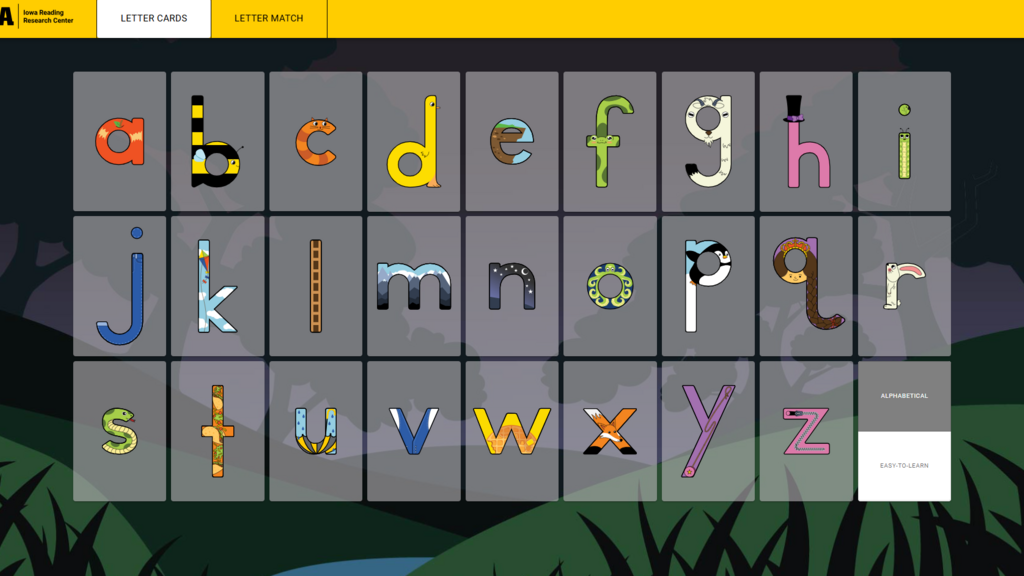
New Spark Early Literacy Hub Supports Early Literacy Skills at Home
Wednesday, May 27, 2026
Through the Spark Early Literacy Hub, caregivers can access the tools they need to support their children’s early literacy skills.

Supporting Early Literacy Through Everyday Interactions With Dr. Ece Demir-Lira
Tuesday, May 26, 2026
Dr. Ece Demir-Lira, an assistant professor in the Department of Psychological and Brain Sciences at the University of Iowa, shares how caregivers can support their children's early literacy development.

Morphological Transparency: Why Some Word Parts Are Easier to “See” Than Others
Thursday, May 21, 2026
Transparency and opacity describe the relationship between a word and the word parts that make it up—that is, how easy it is to identify the word parts within the larger word.

How to Implement Cognate Instruction
Tuesday, May 19, 2026
Teaching with cognates can help multilingual learners draw on prior knowledge to understand new vocabulary.